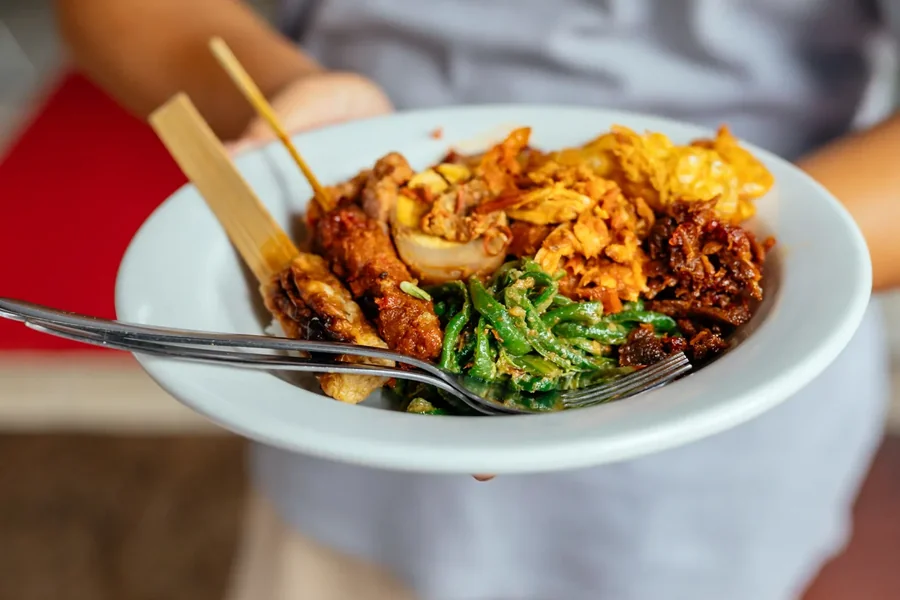
The Bali Food Trail: 10 Eating Experiences Worth Planning Your Trip Around

Food is one of the most underestimated reasons to visit Bali. The island has a culinary tradition that is distinct from the rest of Indonesia, shaped by centuries of Hindu ceremony, agricultural abundance, and a spice palette that produces flavors unlike anything in neighboring cuisines. It also has, in Ubud and Seminyak, two of the most interesting restaurant scenes in Southeast Asia. The ten experiences below cover the full range, from a roadside warung that has been cooking the same dish for thirty years to a tasting menu restaurant that has placed consistently among Asia’s best. All of them are worth building time around.
Why Food Is One of the Best Reasons to Visit Bali
Balinese cuisine occupies an unusual position in the broader landscape of Southeast Asian food. It is less well known internationally than Thai or Vietnamese cooking, which means expectations tend to be lower and the actual experience more consistently surprising. The ceremonial dimension of food in Balinese Hindu culture means that many of the best dishes have a context that restaurant menus cannot fully communicate. Babi guling, the island’s most celebrated preparation, originated as a ceremonial offering before it became a menu item. Lawar, a dish of minced meat, grated coconut, and spiced vegetables, is still prepared collectively for temple ceremonies in village communities and tastes different in that context from any restaurant version.
The practical implication for travelers is that eating well in Bali requires a combination of seeking out the right restaurants and engaging with food at the street and market level. The two registers are not interchangeable, and a trip that only covers one of them will miss half of what the island’s food culture has to offer.
Street Food and Market Eating
The most direct access to Balinese food culture is at the market and street level, where prices are low, turnover is high, and the cooking is done by people who have been making the same preparations for most of their lives.
1. Gianyar Night Market: The Best Street Food in Bali
The night market in Gianyar, a town in central Bali about 20 minutes east of Ubud, is widely regarded as the best street food destination on the island. It operates from late afternoon until midnight and covers a large open-air space with stalls specializing in different preparations. The babi guling stall at the entrance is the most photographed but not necessarily the most interesting. Further into the market, there are vendors selling sate lilit, nasi campur assembled to order, and a range of fried snacks and sweets that rarely appear on tourist menus.
The market is easy to reach by private driver and pairs well with a day trip to the Klungkung area. Arriving between 6pm and 7pm, before the main tourist wave, gives better access to the more specialized stalls and a clearer sense of how the market functions as a community space rather than a visitor attraction.
2. Morning Markets and What to Do With What You Find There
Bali’s morning markets operate between roughly 5am and 9am and serve a primarily local clientele buying ingredients for the day’s cooking and offerings. The Badung market in Denpasar is the largest and most comprehensive, covering multiple floors with sections dedicated to spices, vegetables, meat, and ceremonial materials. The Ubud market, which occupies the ground floor of the main market building and spills onto the surrounding streets, is more accessible for visitors and has a produce section alongside the craft and textile stalls that most tourists come for.
The most useful thing to buy at a morning market is fresh fruit. Bali has an exceptional range of tropical varieties, many of which are difficult to find at their best outside the island. Salak, a scaly-skinned fruit with a dry, astringent flesh, is grown in significant quantities around the Bedugul area and is best bought directly from a market stall rather than a hotel breakfast buffet.
Iconic Balinese Dishes and Where to Find Them
Several dishes define Balinese cuisine in the way that pad thai defines Thai cooking or pho defines Vietnamese. The difference is that the Balinese versions are less standardized and more dependent on the specific cook, the specific occasion, and the specific ingredients available on a given day.
3. Babi Guling at Ibu Oka in Ubud
Ibu Oka is the most famous babi guling restaurant in Bali and has been operating in Ubud for decades. The dish is a whole roasted suckling pig seasoned with a spice paste of turmeric, galangal, lemongrass, and a range of other aromatics, served with rice, lawar, and crackling. The restaurant opens at 11am and typically sells out by early afternoon, which gives a reliable indication of demand. The quality is consistent and the portions are generous, though several smaller babi guling operations in the Ubud area offer comparable quality with shorter queues.
For travelers whose itinerary includes a proper tour in bali that covers central Bali, a stop at one of the region’s babi guling specialists is the most efficient way to encounter the dish in its best form. The preparation is labor-intensive and the results vary significantly depending on the skill of the cook, so eating it at an established operation rather than improvising is a reasonable starting point.
4. Bebek Betutu: The Slow-Cooked Duck That Takes All Day
Bebek betutu is a whole duck marinated in a complex spice paste, wrapped in banana leaves, and cooked for six to eight hours over a low heat. The result is meat that falls from the bone and has absorbed the spice blend deeply enough that every part of the dish tastes of the same layered preparation. It is a dish that is genuinely difficult to rush, and the best versions require advance ordering, often 24 hours ahead.
Warung Nasi Bali Men Weti in Denpasar and several small operations in Gianyar are consistently cited by food-focused travelers as producing reliable bebek betutu. The dish is heavy enough that it works best as a lunch rather than a dinner, paired with plain rice and a light vegetable preparation to balance the richness of the meat.
5. The Suckling Pig Ceremony Turned Restaurant Staple
Beyond Ibu Oka, a number of smaller operations around Bali specialize in babi guling prepared in the traditional ceremonial style rather than adapted for tourist volumes. The village of Gianyar has several of these, as does the area around Klungkung. Finding them requires either a local recommendation or a willingness to follow a queue of motorbikes to a roadside operation that may not have a sign in any language other than Balinese. The effort is usually worth it.
Cooking Classes Worth Taking
A Balinese cooking class provides something that restaurant eating cannot: a structured introduction to the logic of the spice blends and preparation methods that underpin the cuisine. The best classes include a market visit as the first component, which grounds the cooking in an understanding of the raw ingredients before they are transformed.
6. What a Good Bali Cooking Class Actually Covers
A well-designed Bali cooking class covers three things: the spice paste, or base, which forms the foundation of most Balinese preparations; a rice or noodle dish that demonstrates everyday cooking; and at least one ceremonial or celebratory preparation that shows the more complex end of the cuisine. Classes that only teach nasi goreng and satay are covering Indonesian tourist food rather than Balinese cuisine, and while both have their place, the distinction matters for travelers who want to understand what makes the island’s food culture specific.
7. Half-Day vs Full-Day: Which Is Worth Your Time
A half-day class, typically running from early morning to early afternoon and including a market visit and three to four dishes, covers the essentials competently. A full-day class adds depth, additional preparations, and usually a more comprehensive market experience, but it also takes a full day that could be spent on other things. For most travelers on a week-long trip, a half-day class represents the better trade-off. For anyone with a specific interest in food who has more time in Bali, the full-day format at one of the more serious cooking schools in Ubud is worth the investment.
Coffee Culture in Bali
Bali has a coffee culture that operates on two distinct registers: the traditional local tradition, which predates tourism entirely, and a contemporary specialty coffee scene that has developed in Canggu over the past decade and now rivals the best in Asia.
8. Kopi Tubruk and the Local Coffee Tradition
Kopi tubruk is the traditional Indonesian method of brewing coffee: coarsely ground beans are placed directly in the cup and boiling water is poured over them. The grounds settle and the coffee is drunk once they have sunk sufficiently to make drinking possible without consuming too much sediment. The result is strong, slightly bitter, and tastes nothing like the filtered or espresso-based preparations that most international travelers are accustomed to. It is best drunk in a warung with condensed milk on the side and no particular agenda for the next hour.
Kopi Bali, the locally grown variety from the volcanic highlands around Kintamani, has a flavor profile that is distinct from other Indonesian origins, with a lower acidity and a clean finish that works well in the tubruk format. Buying whole beans to take home from one of the Kintamani area producers is a reliable souvenir for anyone interested in coffee.
9. The Specialty Coffee Scene That Has Emerged in Canggu
Canggu has become one of the more significant specialty coffee destinations in Southeast Asia over the past several years, with a concentration of cafes that source single-origin Indonesian beans and apply contemporary brewing methods. Revolver, which has been operating in Seminyak since 2011 and is widely credited with introducing third-wave coffee culture to Bali, remains one of the benchmarks. In Canggu, a newer generation of cafes has built on that foundation with a focus on local sourcing and a broader range of non-espresso brewing methods.
For travelers arriving on an early morning flight, a coffee stop in Seminyak or Canggu on the way from the airport to the first accommodation is a practical way to begin the trip. Many travelers who arrange a bali airport transfer in advance ask their driver to stop at a specific cafe en route, which is a reasonable request and one that most drivers are accustomed to accommodating.
Fine Dining That Justifies the Price
Bali has two or three restaurants that belong in any serious conversation about fine dining in Asia. Both are in Ubud, which reflects the town’s position as the cultural and culinary center of the island rather than the commercial one.
10. Locavore in Ubud: Why It Belongs on Any Serious Food Itinerary
Locavore has appeared consistently on Asia’s 50 Best Restaurants list since 2016 and operates a strict local sourcing policy that makes it one of the more coherent expressions of what Balinese ingredients can achieve when applied with precision and ambition. The tasting menu changes with the season and the availability of specific producers, which means repeat visits are genuinely different experiences rather than variations on the same program. Reservations are essential and should be made several weeks in advance for any visit during peak season.
The restaurant also operates a more casual bar program in an adjacent space, which serves snacks and cocktails built around the same local sourcing philosophy. For travelers who cannot secure a tasting menu reservation, the bar is a reasonable alternative that still gives access to the kitchen’s approach to Balinese ingredients.
Building a Food Itinerary Around Your Trip
The ten experiences above are not equally accessible from all parts of Bali, which means the food itinerary works best when it is mapped against the geographic itinerary rather than planned separately. The Gianyar night market and the Ubud morning market work on any day in the central Bali leg of a trip. A bebek betutu lunch in Denpasar fits a day that includes airport logistics or a south Bali base. Locavore requires advance booking regardless of where you are staying. The Canggu coffee scene is most accessible from a south coast base.
Treating food as a logistical consideration rather than an afterthought, planned at the same time as transport and accommodation, consistently produces better results than trying to find good eating on the day. Bali rewards that kind of preparation across most categories of experience, and food is no exception.