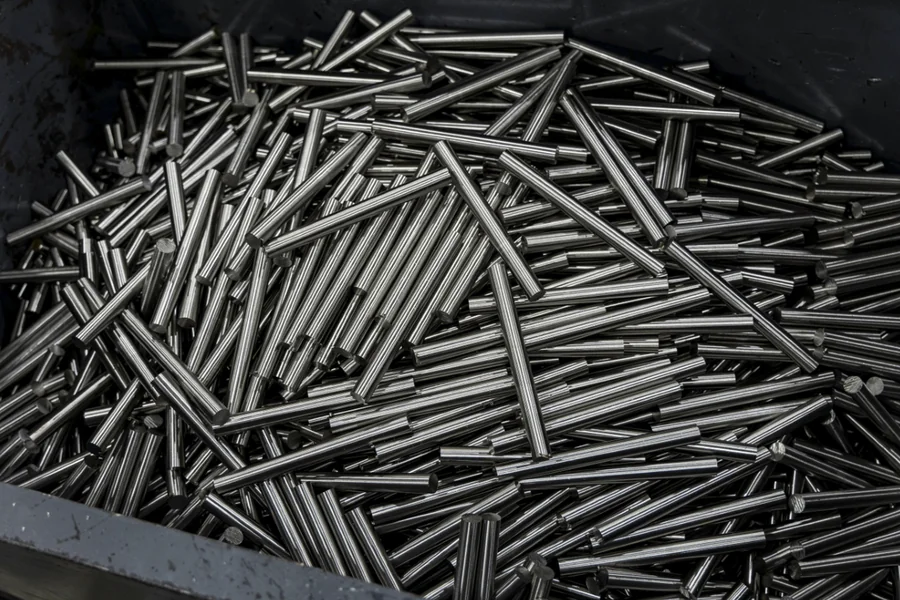
Why More Manufacturers are Turning to Tungsten Heavy Alloy Today

Manufacturers across industries are increasingly adopting tungsten heavy alloy as a go-to material for demanding applications. Its unique combination of density, strength, and durability makes it a standout choice where traditional metals fall short. From aerospace to defense, and from medical technology to industrial tooling, tungsten heavy alloy is reshaping how companies approach performance and reliability.
Density for Precision Applications
One of the most compelling reasons manufacturers choose tungsten heavy alloy is its remarkable density. With a density close to that of gold, it provides unmatched stability and balance in applications where precision is critical. Aerospace engineers rely on it for counterweights and vibration-damping components, while defense contractors use it for kinetic energy penetrators and shielding.
This density allows manufacturers to achieve high performance without increasing component size, a crucial advantage in modern design. The ability to pack more weight into smaller dimensions is especially valuable in industries where space and efficiency are at a premium.
Strength and Durability Under Extreme Conditions
Tungsten heavy alloy is not only dense but also incredibly strong. It maintains structural integrity under extreme heat, pressure, and mechanical stress. This makes it ideal for industries such as oil and gas drilling, where tools must withstand abrasive environments, and for medical devices that require long-lasting reliability.
Unlike softer metals, tungsten heavy alloy resists deformation and wear, ensuring consistent performance over time. Manufacturers value this durability because it reduces downtime and replacement costs. In sectors where equipment failure can lead to costly delays or safety risks, tungsten heavy alloy provides peace of mind and dependable performance.
Versatility Across Industries
The adaptability of tungsten heavy alloy is another factor driving its popularity. In aerospace, it is used for balance weights and gyroscope components. In defense, it serves as a material for projectiles and protective shielding. In healthcare, it is applied in radiation shielding for medical imaging equipment. Even in automotive and industrial sectors, tungsten heavy alloy finds use in tooling and machining applications.
This versatility allows manufacturers to streamline material sourcing while meeting diverse performance requirements. By relying on one alloy across multiple applications, companies can simplify procurement and ensure consistent quality across their product lines.
Cost Efficiency Through Longevity
While tungsten heavy alloy may carry a higher upfront cost compared to conventional metals, its long-term value is undeniable. Its extended lifespan and reduced need for replacements make it a cost-effective investment. Manufacturers recognize that the durability of tungsten heavy alloy translates into lower maintenance expenses and improved operational efficiency.
Over time, these savings outweigh initial costs, making it a strategic choice for companies focused on sustainability and profitability. In industries where margins are tight and competition is fierce, investing in materials that deliver long-term reliability can be a decisive advantage.
Supply and Industry Partnerships
Another reason for the growing adoption of tungsten heavy alloy is the availability of reliable suppliers. Manufacturers benefit from working with finished and semi-finished tungsten heavy alloy providers, like Federal Carbide Company, who ensure consistent quality and tailored solutions. These partnerships allow businesses to access alloys that meet specific performance standards, whether for aerospace, defense, or industrial applications.
Trustworthy providers play a critical role in helping manufacturers integrate tungsten heavy alloy into their production processes with confidence. By collaborating with established suppliers, companies can secure a steady flow of materials and avoid disruptions in production.
Innovation Driving Future Applications
As industries evolve, tungsten heavy alloy continues to open new possibilities. Advances in manufacturing techniques, such as additive manufacturing and precision machining, are expanding how this material can be used. From next-generation medical devices to advanced defense systems, tungsten heavy alloy is positioned to remain a cornerstone of innovation.
Manufacturers are not only adopting it for current needs but also investing in its potential for future breakthroughs. As technology progresses, the role of tungsten heavy alloy will likely grow, supporting new designs and applications that demand strength, density, and reliability.
Conclusion
Tungsten heavy alloy has become a material of choice for manufacturers seeking density, strength, versatility, and cost efficiency. Its ability to perform under extreme conditions and across diverse industries makes it indispensable in today’s competitive landscape. With trusted providers ensuring reliable supply, and innovation driving new applications, tungsten heavy alloy is set to play an even greater role in shaping the future of manufacturing. For readers interested in innovation, industry trends, and practical insights, stayinthewoods.com offers a wealth of engaging content and resources.